





A row of gray-sided two-story houses with porches behind a new light wooden picket fence, with leafy tree branches overhead and grass in the foreground.

Mini Split Installation in Wilmington, DE

Tell us about the job

Takes about a minute. No obligation.

New system or replacementMini-splitNew Castle County, DE
Step 1 of 2

What ZIP code is the job in?

Delaware homes paid 16.57 cents per kilowatthour in 2024, well above the national average. A mini split earns that rate back by moving heat instead of generating it, which is why it costs less to run than baseboard heat or a furnace paired with window units. The efficiency rating matters more here than it would somewhere with cheap power, because every point of it shows up on the bill. Sizing the unit correctly for the room matters too. An oversized mini split cycles on and off instead of running steady, and that costs you more than the rate itself.

7 months
October through April, your system heats
4 months
June through September, it cools
27°F
the average winter night it heats against
85°F
the average summer afternoon it cools against
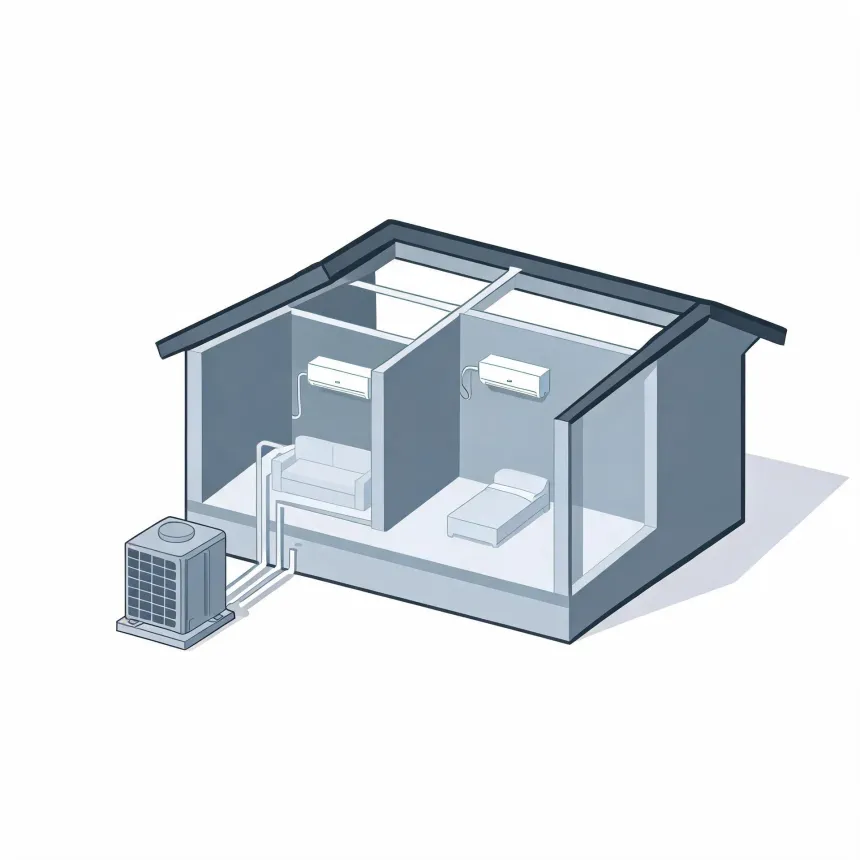
Illustrated cutaway of a two-room house showing two wall-mounted indoor air conditioning units connected by pipes to an outdoor condenser unit on the ground outside.
Your system heats October through April and cools June through September.

NOAA nClimDiv, 1991–2020 normals

A quote that only lists a model number does not tell you what the system can actually do.

Ask for the heating output at low outdoor temperatures, not just the rated capacity, before you compare prices.

Wilmington sees its share of storms, but that doesn't change what size unit a room needs

274 severe weather events from 2015 to 2024
12% of homes statewide lost power a day or more in 2024
228 damaging wind events from 2015 to 2024
Cooling runs June through September hereMay is the month to get a mini split in, before Wilmington asks it to work

Half the homes in New Castle County were built in 1975 or earlier, and half in 1975 or later. Neither age group needs anything different from a mini split. The unit sizes to the room, not the house, so a contractor measures the space and picks the output that matches it. A standard size and a standard efficiency rating do the job here. If your ductwork or wiring dates back to when the house was built, that's worth mentioning when you get a quote, but it doesn't change what the mini split itself needs to be.

A mini split here has to clear a real efficiency bar, and the credit helps you clear it

New Castle County sits in climate zone 4A, which asks real work of both heating and cooling. Any mini split installed here has to meet 14.3 SEER2 for cooling and 7.5 HSPF2 for heating, the federal minimum for split-system heat pumps. A federal tax credit is available on qualifying systems, which offsets some of the cost of meeting that standard.

Find a contractor
A white outdoor air conditioner condenser unit mounted on metal wall brackets against gray horizontal siding, with a blue sky and white clouds behind it.

Sized to the room, not the house

A contractor sizes a mini split by working out how much heat the room loses on the coldest nights and how much it gains from sun and appliances in summer. That calculation sets the output the unit needs. Go bigger than that number and the compressor short-cycles. It switches on, satisfies the thermostat fast, and shuts off again before it ever settles into a steady run. A room cooled that way feels clammy, because the unit never stays on long enough to pull moisture out of the air. Go smaller and the opposite problem shows up. The unit runs flat out on the coldest or hottest days and still can't catch up to the setpoint. Sized right, it runs long, slow cycles instead of short bursts, and that steady running is what the compressor is built for.

The old system doesn't have to come out first

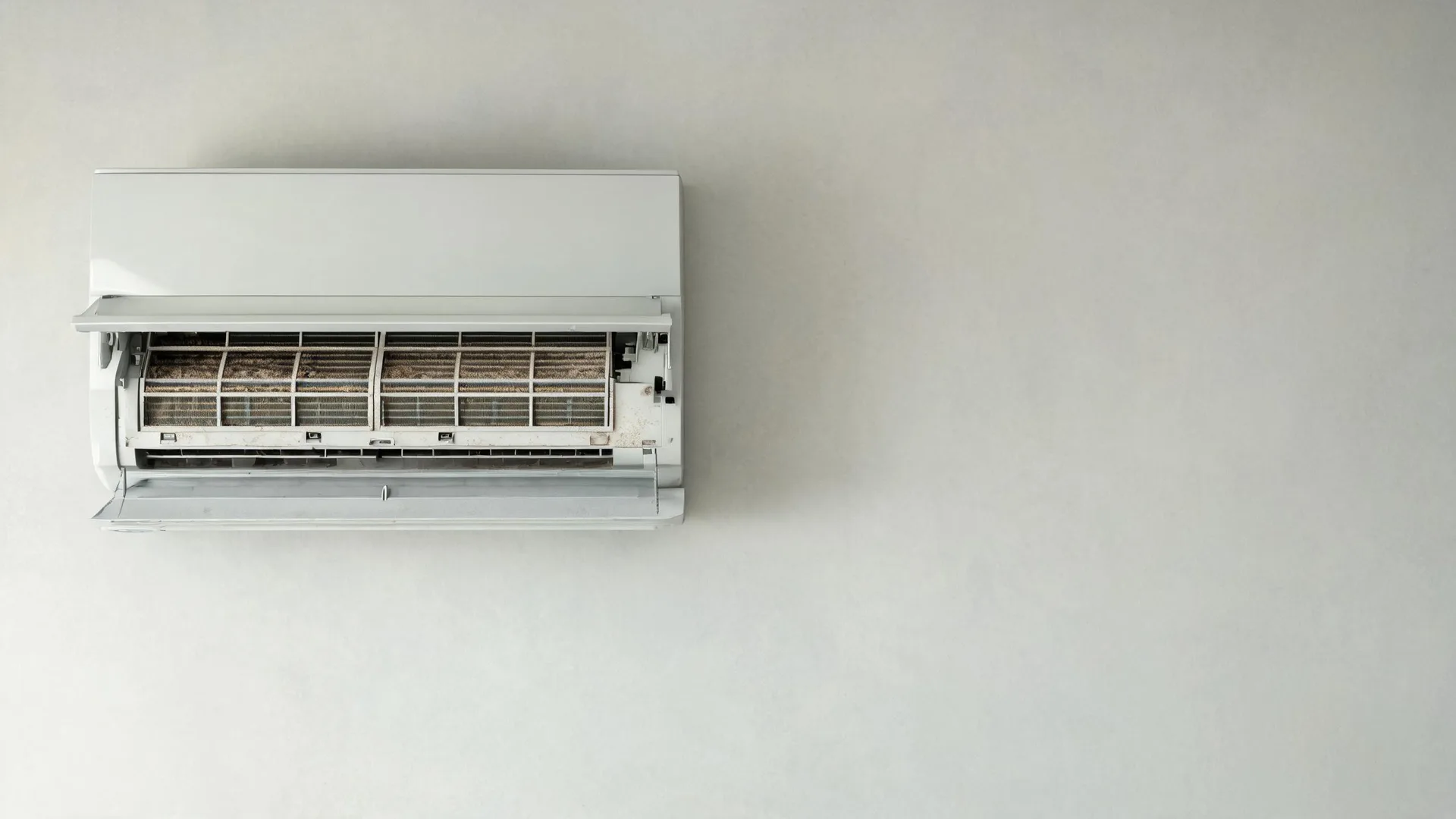
A mini split runs on its own line set and needs no ductwork, so swapping out a furnace or removing baseboard heat doesn't have to happen before the new system goes in. A contractor can decommission the old equipment and cap the gas or electric feed to it once the mini split is running. Window units just come out of the window.
A furnace or boiler can stay for backup

Some homeowners keep the old furnace or boiler in place and let the mini split carry most of the load, switching to the old system only on the coldest nights. That only works if the old equipment is still safe to operate. A contractor can tell you whether it's worth keeping or whether it's at the point where running it at all is a liability.

A mini split quote isn't one number, it's several added together. The equipment itself varies by output and by how many indoor heads it has to run. A single zone costs less than a multi-zone system feeding several rooms off one outdoor unit. Line set length matters too, since the distance between the outdoor condenser and each indoor head determines how much refrigerant line and wiring the job takes. Where the outdoor unit sits plays in as well. A condenser going against an outside wall near the electrical panel is a simpler job than one that has to go on a roof or at the far end of a long exterior wall. The electrical work can swing the price on its own, because some homes have the circuit capacity for a new line and some need a panel upgrade first. None of this shows up on a spec sheet. It shows up when a contractor walks the space and sees what the job actually asks for.

SEER2 tells you how much cooling the unit produces for the power it draws over a full season, averaged across mild days and brutal ones. HSPF2 is the same idea for heating. Higher numbers mean the compressor is doing more work per watt, not that the unit is bigger or stronger. Systems rated for the same room can carry very different numbers on that label, and the higher one is the one that costs less to run every month after it's installed. The rating only holds if the system is sized and installed correctly. A unit with a strong efficiency rating still wastes power if it's too small for the room and runs constantly, or if it's too big and short-cycles instead of settling into a steady run.