Is a dual fuel heat pump worth it in Delaware

New system or replacementHeat PumpDelaware
Step 1 of 2

What ZIP code is the job in?

For most homes in Delaware, yes. A heat pump alone can struggle once outdoor temperatures drop into the 30s and below, leaning hard on backup electric resistance heat that runs up your bill fast since power here isn't cheap. Dual fuel pairs your heat pump with a gas furnace, so the system switches to gas automatically on the coldest days instead of burning electricity to make up the difference. Since most homes in Delaware already heat with gas, that furnace is often already in place, which makes adding or keeping it alongside a heat pump a smaller step than starting from scratch. You still get the heat pump doing the job most of the year, including the muggy summers here, and the furnace only kicks in when it actually makes sense financially. The tradeoff is the upfront cost of having two systems tied together and installed correctly so the switchover works the way it should.

An outdoor heat pump unit on a concrete pad beside a house corner, with a small electrical box and conduit on the wall, gravel border, grass, and a plain light-colored wall filling the right side.

Where the switch happens

Dual fuel setups switch over to the gas furnace somewhere in the 30s to low 40s, depending on how the contractor sets the thermostat. Above that point, the heat pump moves heat more cheaply than gas burns it. Below it, the heat pump has to work harder for less output, and that's when the furnace takes over. The switchover point isn't fixed. A contractor can adjust it once they see how your house holds heat and what gas and electric rates look like.

A grey outdoor heat pump unit on a concrete pad beside a white stucco wall and dark siding with a downpipe, with gravel and grass in the foreground.

Why the furnace matters more here

Most homes in Delaware already have a gas line run for a furnace, which is what makes dual fuel practical instead of a big add-on. The furnace isn't a backup sitting idle. It's doing real work on the coldest days of the year, the ones where a heat pump running on electric resistance would cost the most. Keeping the gas furnace in the system means those days get handled by the cheaper fuel instead of the expensive one.

What is your heat pump doing on the cold mornings

On the colder mornings this winter, listen to what's running. If the heat pump keeps going without ever handing off, and the air coming out of your vents feels lukewarm instead of warm, that's electric resistance heat picking up the slack. You'll see it on your bill before you see it anywhere else. Since most homes in Delaware already have a gas line for the furnace, that heat pump is working harder and costing more than it needs to on the coldest days. Check your thermostat settings too. If nobody ever set the switchover point, the system may be defaulting to running the heat pump alone well past where gas would carry the load cheaper.

An outdoor condenser unit on a concrete pad beside a gray lap-sided house, with an electrical disconnect box and conduit on the wall and shrubs with mulch to the right.

The heat pump handling it alone

On a mild day, the heat pump outside is doing exactly what it should, moving heat in or out without any help from the furnace. Clean coils, clear airflow around the unit, no ice buildup. This is the setup working the way it's meant to.

An outdoor air conditioner condenser unit on a concrete pad beside a house with horizontal vinyl siding, with refrigerant lines and an electrical disconnect box on the wall and dry leaves on the ground.

The heat pump that needs the furnace to carry it

Dirty coil fins and leaves piled against the base choke off airflow the unit needs to work efficiently. A heat pump in this shape struggles more in the cold, and in a dual fuel setup, that means leaning on the gas furnace sooner and more often.

A woman with shoulder-length brown hair wearing a beige knit cardigan sits in a gray upholstered armchair near a window, looking off to the side with a slight smile, with bookshelves blurred in the background.
A woman with her hair in a bun holds a sleeping young child against her chest, both wrapped in a textured beige knit blanket on a sofa in a dimly lit room with a lamp, framed picture, and bookshelf behind them.
A beige outdoor condenser unit on a gray pad beside a house with gray horizontal siding, with refrigerant lines and an electrical disconnect box on the wall, bordered by dark mulch, a stone retaining wall with shrubs, and a paver walkway.

A pro who works on heat pumps

One installer gets your project, so there's no bidding war over it.

A local installer who puts in heat pumps gets your project.

Find my pro

No fee to send it, and nothing to sign.

A man with grey hair and stubble in a dark sweater sits on a grey sofa indoors, looking off to the side, with a potted plant and a sunlit window behind him.
A man with gray hair, a beard and glasses, wearing a dark green sweater, sits on a gray sofa in a sunlit living room with a potted plant, table lamp and wooden sideboard behind him.
A middle-aged man with graying hair and a short beard sits on a blue sofa in a living room, looking toward a window, with a bookshelf, lamp and framed picture in the background.
A man with graying curly hair and a dark green sweater sits on a gray sofa in a sunlit living room, looking off to the side, with a framed picture, shelving, an armchair and a window with sheer curtains behind him.

A control board, not you, decides which fuel is running on any given morning. It watches outdoor temperature and hands off between the heat pump and the furnace at whatever point the contractor set during installation. If your bills seem off that winter, that point can be moved later. When it's working right, only one side is ever heating at a time. The heat pump doesn't run alongside the furnace, since that would mean paying for both at once for no gain. None of this changes what the furnace itself needs to stay safe. The flue still has to vent properly, the gas line still has to be sound, and the furnace still needs combustion air the same as it would without a heat pump attached. The outdoor unit still goes through defrost cycles on cold days, the same as it always did. What dual fuel adds is one more point that can fail: the sensor or board that triggers the switch. If that fails, the furnace can end up carrying days the heat pump was built to handle on its own, and the fix is in that control, not the equipment itself.

How the switchover actually runs

  • A thermostat or a separate control board reads outdoor temperature and decides which fuel runs, not the homeowner flipping a switch.
  • The changeover point gets set during installation and can be adjusted later if your bills or comfort say it's wrong.
  • The heat pump and furnace never run at the same time in a properly set up system, since that would waste fuel on both ends.
  • The furnace still needs its flue, gas line and combustion air working correctly, since dual fuel doesn't remove any of that.
  • A failed sensor or a bad control board can get the switchover stuck, leaving the furnace running on days the heat pump should handle.
  • The outdoor unit still needs defrost cycles in cold weather, and dual fuel doesn't change how often those happen.
A gray outdoor condenser unit on a concrete pad beside a light-green sided house, surrounded by mulch, ornamental grasses and a shrub, with mowed lawn in the foreground.
The heat pump running clean, coils clear, nothing iced over, doing the job outside without strain.
An outdoor condenser unit on a concrete pad beside a horizontal-sided house, with insulated refrigerant lines running to a wall-mounted box, surrounded by bare dirt.
An older unit like this, worn and weathered, is the one most likely to struggle once gas should be carrying the load.
An outdoor air conditioning condenser unit on a concrete pad beside a dark horizontal-siding wall and a brick wall, with flowering shrubs and grass nearby.

The unit's been sitting on the same spot in the side yard since before you owned the place. Spring sun is out, the grass around it already green, and you walk past it with the trash can and actually look at it for once. Rust has worked its way along the base, flaking where the metal meets the ground. You crouch down, push on the panel with one finger, and it gives a little more than it should. It still ran fine all winter, handing off to the furnace on the cold mornings like it was supposed to. But standing here now, you're thinking about how many more Delaware winters this one has in it before something in that cabinet gives out for good.


Power costs 17.15 cents per kilowatt-hour statewide

That's what you're paying whenever the heat pump leans on electric resistance heat instead of the furnace. It's also what you pay for the heat pump's normal operation, which is why getting the changeover point right matters so much to your bill.

EIA-861 2025 statewide residential average

A gray outdoor heat pump unit on a concrete pad beside a house with horizontal lap siding, connected by conduit and a flexible line to a wall-mounted disconnect box, with low shrubs and mulch nearby.

Running the way it should

This is a heat pump doing its job without strain. Coils clear, fan running smooth, nothing iced over on the cabinet. On a day like this, it's moving heat cheaper than the furnace could, and dual fuel is just letting it work until the temperature says otherwise.

An outdoor air conditioner condenser unit on a concrete pad beside a house with horizontal siding above a concrete block foundation, with insulated refrigerant lines and a vertical white pipe on the wall.

Worn and overdue

Rust along the base, weathered cabinet, lines running past a foundation that's seen some winters. A unit in this shape is the one more likely to short-cycle or lean on backup heat when it shouldn't have to. Worth having someone check before the cold settles in.

A woman in a cream cardigan and jeans stands with one hand raised facing an open front door of a gray horizontal-siding house, with a black lantern wall light, a potted shrub with yellow flowers, and a stone-faced porch column.

So is it worth it where you live

For most homes in Delaware, dual fuel earns its keep. It keeps the heat pump working the mild months and hands the job to gas when the air gets too cold for the heat pump to handle cheaply. Getting the changeover point right is what makes the difference between a system that saves you money and one that quietly runs up your bill all winter.

That setting, and the installation itself, is where it's worth having someone who works on these systems in Delaware specifically, not just heat pumps in general. A contractor who installs dual fuel systems in this area season after season has seen which furnaces and heat pumps pair well and where the changeover tends to need adjusting once a Delaware winter actually tests it. Ask for a match and one licensed local contractor who handles this equipment will reach out to look at your setup directly, instead of your information going out to a handful of companies at once.

A living room corner with a light beige sofa holding a textured taupe cushion, a large ceramic vase of olive branches by a window, a framed neutral artwork on the wall, and a dark bowl with stacked books in the foreground.
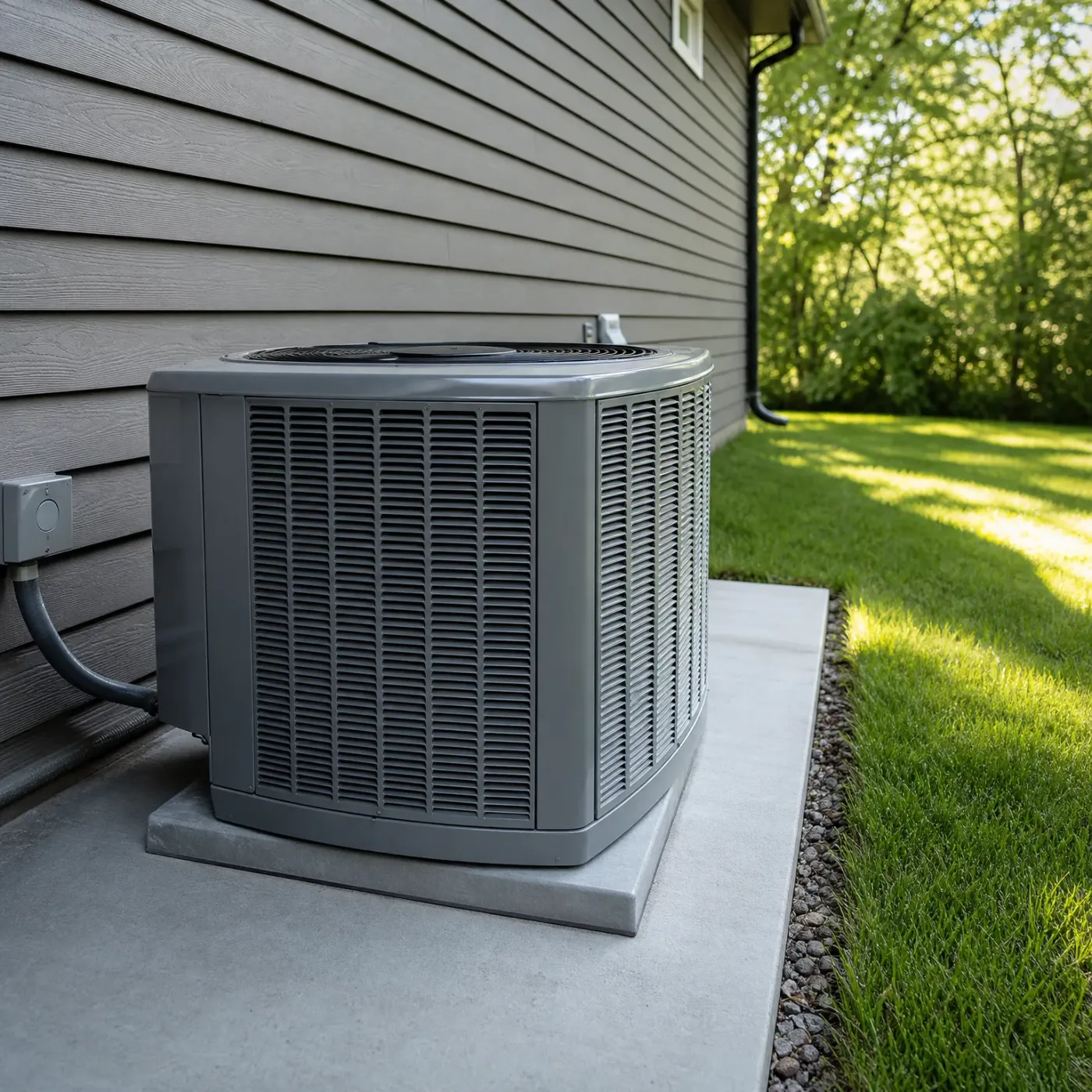
A gray outdoor air conditioner condenser unit on a concrete pad beside a house with horizontal lap siding, with an electrical disconnect box and conduit on the wall, a downspout, gravel edging and a green lawn with trees to the right.

Get your heat pump to the right pro

Get a heat pump pro

The pro who reaches out is licensed in Delaware.

Sending the form costs nothing.