






A row of gray vinyl-sided two-story houses set back behind a mowed grass lawn, with a weathered wooden stockade fence on the left and large deciduous trees behind.

Mini Split Installation in Dover, DE

Tell us about the job

Takes about a minute. No obligation.

New system or replacementMini-splitKent County, DE
Step 1 of 2

What ZIP code is the job in?

Electricity in Delaware ran 16.57 cents per kilowatthour in 2024. That rate applies to every hour a system runs, so the efficiency of a mini split matters more here than in states where power is cheap. A unit that pulls less wattage for the same heat or cooling keeps paying you back on every bill it touches. The difference between a well-matched system and an oversized or aging one shows up month after month, not just on the invoice the day it's installed.

7 months
October through April, your system heats
4 months
June through September, it cools
28°F
the average winter night it heats against
85°F
the average summer afternoon it cools against
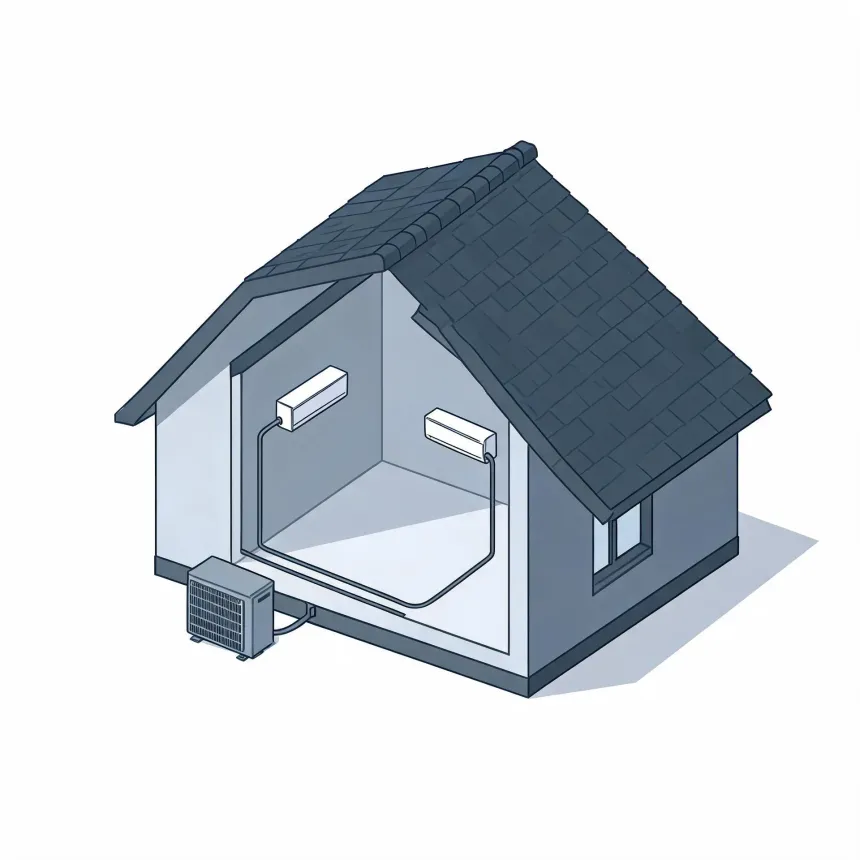
Isometric cutaway illustration of a small house with a shingled gable roof, showing two wall-mounted indoor air conditioning units connected by refrigerant lines to an outdoor condenser unit on the ground outside.
Your system heats October through April and cools June through September.

NOAA nClimDiv, 1991–2020 normals

An old mini split has refrigerant in its lines, and that has to be recovered before any equipment comes out.

Removing the old unit is part of a mini split installation, not separate work billed on top of it.

May gets this done before cooling starts in June

Cooling runs June through September
Summer afternoons average 85°F
120 damaging wind events from 2015 to 2024
Dover runs on gas, not electric40.6% of Kent County homes heat with utility gas, more than any other fuel

Kent County is zone 4A, which means real heating load and real cooling load in the same year. Any mini split installed here now has to clear the federal minimum for that zone. That's 14.3 SEER2 for cooling and 7.5 HSPF2 for heating. The standard treats a ductless heat pump the same as any other split system, so there's no separate, lower bar for going ductless. Those numbers are a floor, not a target. A unit that barely clears them will cost more to run than one built past it, which is what the electric rate on this page comes back to. A system that meets the standard may also qualify for the federal tax credit, worth checking against what's actually installed.

At 16.57 cents per kilowatthour, get the install right from the start

Electricity here runs 16.57 cents per kilowatthour. A mini split sized and installed correctly holds to its rated efficiency, so that rate works in your favor instead of against you on every bill it touches.

Find a contractor
A man in a gray long-sleeve shirt and brown pants, seen from behind, carries a canvas tool bag up wooden steps toward a green front door.
A white mini-split air conditioner outdoor condenser unit mounted on metal brackets against a beige stucco exterior wall, with a blue sky and scattered clouds in the background.

The label is a ceiling, not a running average

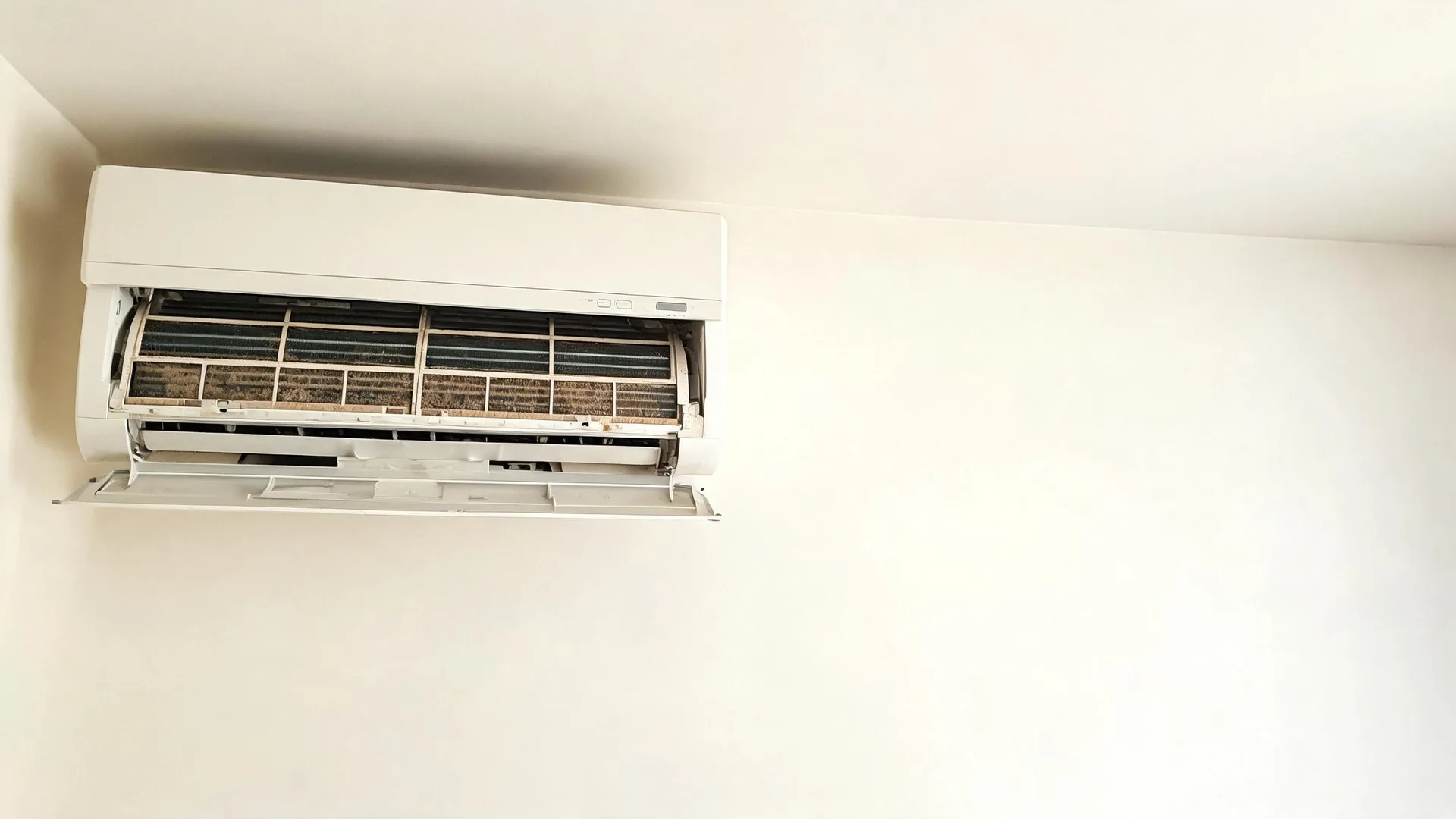
The SEER2 and HSPF2 numbers on the label come from a lab test, run at a fixed indoor and outdoor temperature with the refrigerant charge exactly right. Your system will spend most of its time somewhere other than that exact test point, so the label is a ceiling, not a running average. What keeps the real number close to that ceiling is a charge that's correct at install, a filter that stays clean, and a coil that isn't caked with dust or iced over. A unit running low on refrigerant or fighting a dirty coil pulls more watts for the same heat or cooling, whatever the label says. The rating also assumes the indoor and outdoor units are matched to each other and sized to the room they're serving. Oversize it and the compressor short cycles, switching on and off instead of running steady, which wastes power the rating never accounted for. Undersize it and the compressor runs flat out trying to catch up, which wastes it from the other direction. The label tells you what the equipment is capable of. Whether it actually runs that way comes down to the sizing and the charge on day one, and the filter and coil every year after.

The line set and where the unit goes

The indoor head and outdoor unit connect through a refrigerant line set run through a wall. The length of that run, how many bends it takes, and whether it has to cross a floor or go up an exterior wall all add work. A straightforward wall between adjoining rooms is the simplest case. Running line to a second floor or around the outside of a house takes more line, more mounting, and more time to insulate and seal.
One head or several

A single zone is one indoor head tied to one outdoor unit, the simplest version of this job. A multi-zone system ties several indoor heads to one larger outdoor unit, which means more line sets, more mounting locations, and a bigger outdoor unit sized to carry all of them at once. Each additional zone adds its own install work on top of the shared outdoor unit, not a small add-on to a single-zone job.

Sizing a mini split starts with a load calculation, not the square footage of the room. That calculation weighs the windows, the ceiling height, how many exterior walls are involved, and where the sun hits that space through the day. Skip it and guess by room size instead, and the unit that gets picked is usually too big. An oversized head cools the air fast, shuts off, then starts again a few minutes later. That short cycling never lets the system run long enough to pull moisture out of the air, so the room feels cold and clammy at the same time. Too small and it runs constantly, straining to hold the temperature on the hottest or coldest days and never quite getting there. The right size is the one that runs long, steady cycles, because that's where a heat pump operates most efficiently and holds the room evenly, not the one that looks right on paper for the square footage alone.

Install day starts with the outdoor unit and the wall sleeve, not the indoor head going up. The refrigerant line set, drain line, and power wiring all have to pass through that wall sleeve, so it gets cut and sealed before anything gets mounted. The indoor head hangs on a mounting plate and waits while the line set gets run and connected. Once the connections are made, the line set gets pressure tested, because a line set that holds pressure is one that won't leak refrigerant down the road. After it holds, the system gets evacuated to pull out moisture and air, then charged, and only then does it get powered on and checked against what it's rated to do. Any of those steps skipped or rushed shows up later as a system that won't hold its charge or won't run the way the label says it should.