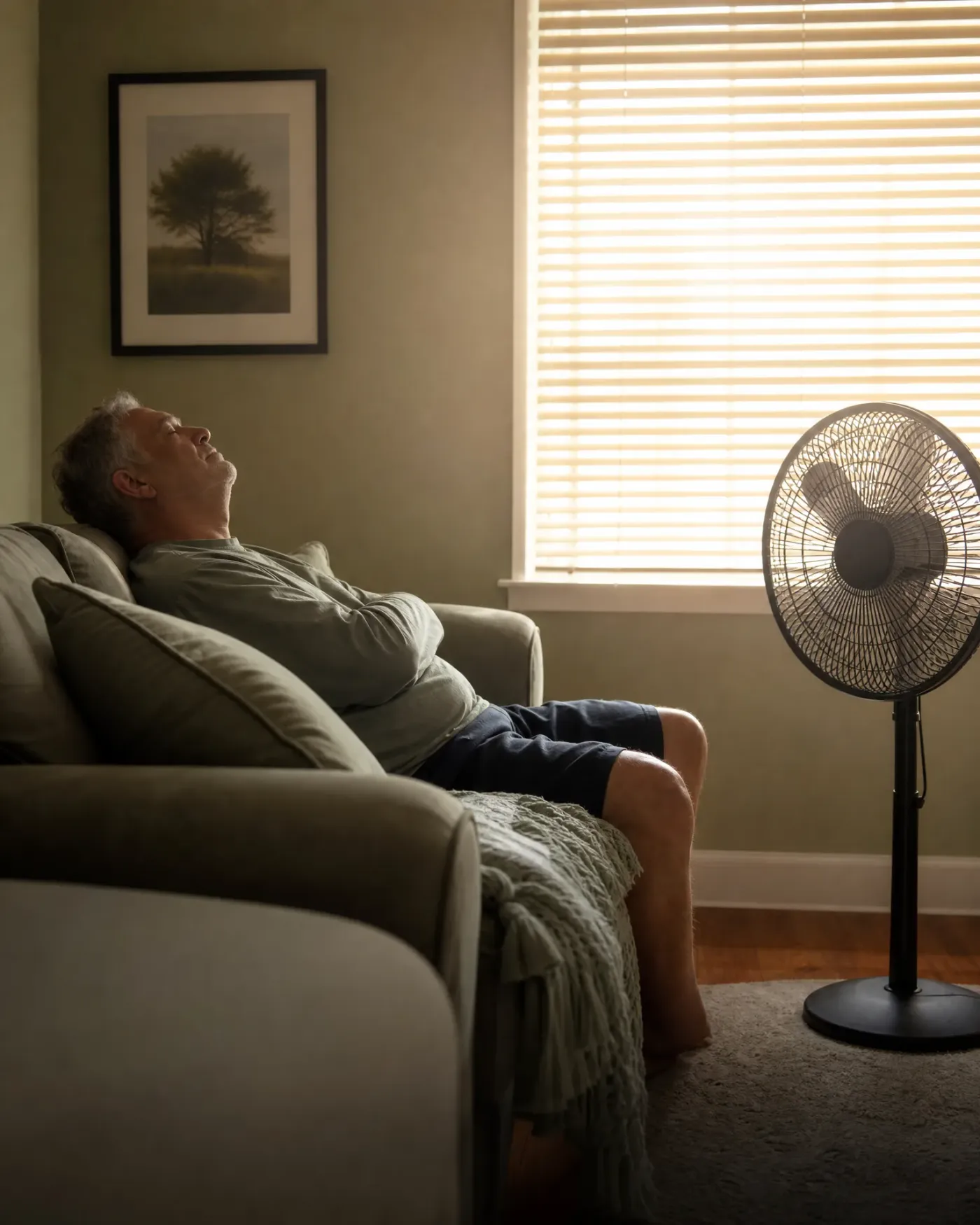

Why your heat pump runs on emergency heat in Delaware

RepairHeat PumpDelaware
Step 1 of 2

What ZIP code is the job in?

Why is my heat pump stuck on emergency heat in Delaware?

You flip on the heat and the "EM HEAT" light is already lit, or it came on by itself. The system still warms the house, but it's running the backup strip heat instead of the heat pump itself, and you know that's not how it's supposed to work day to day. You want to know what made it switch over and whether it's something to let run or something to get looked at.

Something is stopping the heat pump from moving heat, so the system fell back to its electric backup

Emergency heat means the outdoor unit has stopped working and the system is running on electric strip heat alone. That switch happens on its own when the outdoor unit loses refrigerant, ices up and can't defrost, or trips on a bad component, or it happens because someone set the thermostat to "emergency heat" by hand. Either way, the house stays warm, but you're paying for electric resistance heat instead of a heat pump moving warmth from outside air, and with power costs in Delaware that difference shows up fast on the bill. It isn't a setting to leave alone through a cold stretch. The outdoor unit needs a look to find out why it stopped carrying its share of the load.

A gray outdoor condenser unit sits on a concrete pad against a house wall with horizontal siding above a stone veneer base, with an electrical disconnect box and conduit on the wall and a leafy shrub in mulch to the left.

Heat Pump Running Right

This is what a working heat pump looks like outside: coils clear, fins open, nothing blocking airflow around the cabinet. Air moves through it freely in both directions, so it can pull heat from the cold air outside even on a raw Delaware day. A unit that looks like this usually isn't the reason emergency heat kicked on.

An outdoor air conditioner condenser unit on a concrete pad beside a house with beige vinyl siding, with a gray electrical disconnect box and insulated refrigerant lines on the wall and river rock to the right.

Heat Pump Running Dirty

Coils packed with dirt and yard debris can't move enough air across them to pull heat from the outside air. The unit works harder for less heat, and on colder nights it may trip into emergency heat just to keep the house warm. Clearing the fins is something a contractor checks early, before anything inside gets opened up.

Short Cold Snap or Real Problem

Normal for a Few Hours

  • Below freezing, most heat pumps need strip heat to help out during defrost or on the coldest mornings, so a short run on EM HEAT isn't a breakdown.
  • If it kicked on overnight when temperatures dropped into the 20s and switches back once the air warms, the system is working as designed.
  • The defrost cycle melts ice off the outdoor coil, and strip heat covers the house while that happens, usually for a few minutes at a time.
  • If your electric bill jumps for a day or two but the heat pump goes back to normal after a cold snap passes, nothing needs fixing.
  • EM HEAT switched on by hand, by someone testing it or by a thermostat setting left over from before, explains it without any fault in the equipment.

A Sign to Have It Looked At

  • If EM HEAT stays lit for days with no hard freeze to explain it, the heat pump itself has stopped doing its job.
  • A low refrigerant charge or a failed reversing valve can keep the outdoor unit from pulling heat from the air, pushing the system onto strip heat full time.
  • Ice building up on the outdoor coil that never clears on its own points to a defrost control or sensor that isn't switching back.
  • A thermostat or control board fault can lock the system into emergency heat even when the heat pump outside is capable of running.
  • Since power is expensive here, a heat pump running on strip heat for more than a day or two costs a lot more to heat the same house.
  • Gas is the main heat source in most Delaware homes, so a heat pump stuck on backup heat often means it's being asked to do a job it wasn't built for alone.
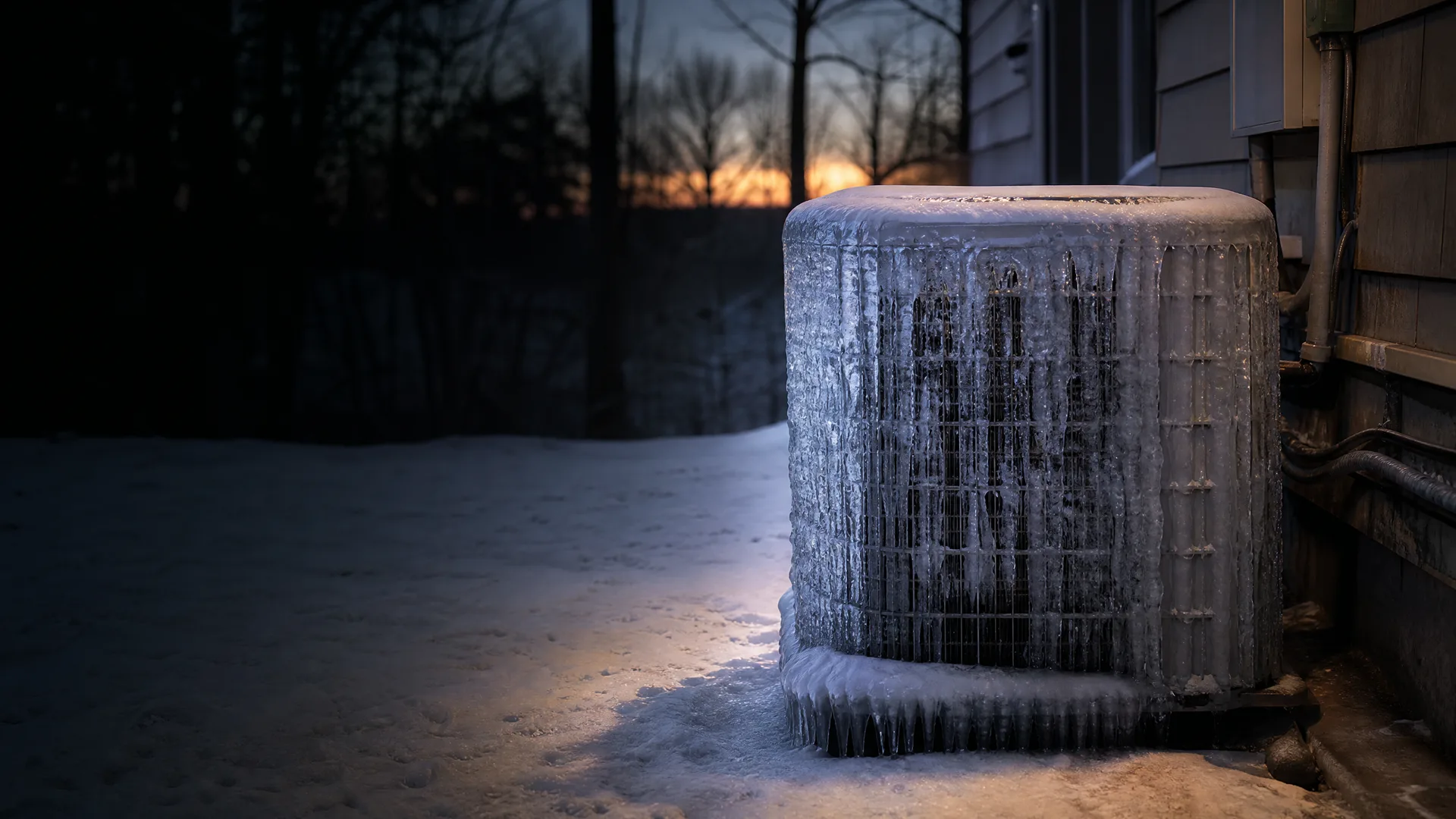
An outdoor condenser unit encased in thick ice stands on snow beside a house with horizontal siding and exterior pipes, with bare trees and a sunset glow in the background.

You're out before work, coffee in hand, and the side yard is still gray with first light. The grass is stiff with frost. Your heat pump sits against the fence, and it's wearing a shell of ice an inch thick over the coils, climbing up past the fins. Nothing about it is turning. Inside, the EM HEAT light is lit and the house is warm, but that warmth is coming from the strip heat, not the unit outside. You crouch down and touch the cabinet. Cold, solid, silent. Delaware mornings like this, in the teens overnight, can build ice faster than a unit can shed it on its own.

The right pro for this job

A heat pump that won't come off emergency heat is running on strip heat alone, and strip heat is electric resistance, the most expensive way to warm a house. Delaware power rates make that switch cost real money fast, especially stacked against what most homes here already pay to run gas elsewhere. A thermostat stuck in EM HEAT past a cold snap, a defrost cycle that won't end, a compressor that's gone quiet while the fins stay buried under ice: these point to a stuck reversing valve, a failed sensor, or a compressor that's done. None of that sorts itself out by waiting through another bill cycle. A contractor who works on heat pumps in this area can tell you in one visit whether the fix is small or whether the system is working against itself every hour it runs this way. Sending the request means that's someone else's job to sort out now, not yours.

Strip heat has no outdoor coil and nothing to defrost, so it can't get stuck the way a heat pump can. The thermostat just has to call for it.

If yours stays on EM HEAT for days instead of hours, the thermostat is still calling for backup heat because the heat pump side isn't answering, and a contractor can find out why.

A woman in a gray turtleneck sweater stands by a window looking outside at snowy ground, with a dimly lit living room containing a sofa, shelves, lamp and a lit candle behind her.
A woman in a cream cable-knit turtleneck sweater stands in a warmly lit living room with a fireplace and shelves behind her, looking out a window toward snow-covered trees and a railed deck.
A woman in a cream knit turtleneck sweater stands by a window looking out at snow, with a lit fireplace, sofa and lamp in the room behind her.
A woman in a gray knit sweater sits by a window looking out at falling snow, with a dimly lit living room containing a sectional sofa, pillows, a lamp and houseplants behind her.

A Few Hours

The heat pump switches to EM HEAT overnight when it's coldest, then switches back once temperatures climb and the ice clears off the coil on its own.

Get my match

Days in a Row

The light stays on no matter how warm it gets outside. That points to a stuck sensor, a bad reversing valve, or a thermostat still calling for backup heat it doesn't need.

Get my match
A smiling man in a denim shirt and white t-shirt stands in an open dark doorway of a stucco house, facing a woman with long brown hair and a green jacket seen from behind in the foreground.

How the thermostat decides which one to run

Inside the thermostat or the control board is a setting called the balance point, the outdoor temperature below which the heat pump alone can't keep up with how fast the house loses heat. Above that point, the compressor runs and the strip heat stays off. Below it, the board brings the strip heat in to help, or takes over fully if a sensor on the outdoor coil reports ice. That sensor, the defrost control, is what flips the system into EM HEAT during a defrost cycle. It's also the part that fails stuck, telling the board there's ice when there isn't, or never telling it the ice cleared.

You can't see the defrost board or test the sensor from the thermostat. A contractor who works on heat pumps can read the fault code off the control board, check the sensor against the actual coil temperature, and tell you in one visit whether the part failed or the board just needs a reset. Getting matched with someone who handles this equipment regularly is the fastest way to find out which one it is.

Interior corner of a room with a window and sheer curtain at left, a gray upholstered sofa with a cushion at right, and a round wooden table holding stacked books and a round vase with an olive branch.
A gray outdoor condenser unit sits on a concrete pad beside a house with horizontal lap siding, with a wall-mounted disconnect box and refrigerant lines, mulched beds and a shrub nearby, and a concrete walkway in the foreground.

Running Right

The unit sits clear on its pad, mulch beds trimmed back, nothing leaning against the cabinet. Conduit runs clean to the disconnect box on the wall. Air passes through the coil freely, which is what lets it pull heat from cold air instead of handing the job to strip heat.

An outdoor air conditioner condenser unit on a concrete pad beside a light gray vinyl-sided house, with an electrical disconnect box and conduit on the wall and bare soil in the foreground.

Running in Trouble

Same setup, same disconnect box on the wall, but something here is making the control board give up on the heat pump and call for backup instead. It might be a frozen coil, a bad sensor, or a compressor that won't start. From outside, it can look almost the same unit as the one running right.

Power costs 17.15 cents per kilowatt-hour statewide

At 17.15 cents a kilowatt-hour, strip heat is the most expensive way your system runs. Every hour it stays stuck on EM HEAT instead of switching back to the heat pump shows up on your next bill, not just the thermostat.

EIA-861 2025 statewide residential average

A heat pump that clears itself after a few cold hours is doing its job. One that stays on EM HEAT for days, with no ice and no good reason, has a stuck valve, a bad sensor, or a thermostat that isn't talking to the outdoor unit the way it should. You don't have to figure out which one it is standing in the cold staring at the cabinet. Send in what you're seeing and you'll be matched with a contractor who works on heat pumps in Delaware and knows what strip heat running nonstop actually costs on a bill like yours. Once that's sent, it's off your plate. You're not the one calling around, explaining the EM HEAT light to three different answering services, hoping someone can look at it this week. Your part was catching it. The rest is a phone call you don't have to make yourself.

Interior room corner with sunlight from a window, showing peeling paint and damaged plaster on the wall above a white baseboard, a wooden cabinet with a pale bowl on top, hardwood floor and a patterned rug.
Interior corner of a room with tan walls, white profiled baseboard and window trim, a wood-plank floor in sunlight, and green foliage visible through the window.
An empty room corner with cream walls, white baseboard, two windows with deep sills showing green foliage outside, and a wood plank floor lit by sunlight.
Empty room corner with beige walls, white beadboard wainscoting, chair rail and baseboard, a window with green foliage outside, and sunlight casting leaf shadows on the wall above a wood floor.
Sunlit room corner with a multi-pane window, beige walls, white baseboard, wood floor with a woven rug, and a dark wooden cabinet holding a ceramic table lamp below a framed picture.

A heat pump pro near you

Once you send the form, finding a pro is off your list.

Request a pro

You only hire the pro if you want to.












