White colonial houses with lit windows photographed at dusk along a tree-lined residential street.

Heat Pump Repair in Wilmington, DE

Tell us about the job

Takes about a minute. No obligation.

RepairHeat PumpNew Castle County, DE
Step 1 of 2

What ZIP code is the job in?

A heat pump here works, but it's not punished for it

Wilmington asks for real heating and real cooling, winter lows averaging 27°F and summers humid enough to keep a compressor busy. That's a normal load for a heat pump built for this climate, not an extreme one.


So when one breaks here, it's usually not from overwork

A heat pump that hasn't taken storm damage has probably been running within its limits all along. That points a repair call toward a worn part or a wiring fault, not a system run into the ground.

7 months
October through April, your system heats
4 months
June through September, it cools
27°F
the average winter night it heats against
85°F
the average summer afternoon it cools against
Isometric cutaway illustration of a small house showing interior rooms with furniture, an indoor air handler with ductwork, and lines running to an outdoor condenser unit beside the building.
Your system heats October through April and cools June through September.

NOAA nClimDiv, 1991–2020 normals

September is the last month before heat takes over here, running October through April.

A part that was already weak tends to fail in that first cold snap, not before.

A heat pump costing you more every month it runs wrong

Power costs 16.57 cents a kWh statewide
228 damaging wind events from 2015 to 2024
20 hail events from 2015 to 2024
What's actually wrong with it228 damaging wind events hit New Castle County between 2015 and 2024, and most heat pumps here never take a hit from any of it.

Half the homes in New Castle County were built in 1975 or earlier, half in 1975 or later. That split doesn't point to any one cause when a heat pump breaks down. A unit installed in an older home runs the same cycle as one in a house built last year. If the system is wired right and sized right for the space it's in, its age and the age of the house around it aren't connected. What usually explains a breakdown is simpler. A contactor worn from cycling on and off. A capacitor that's weakened. A sensor giving a false reading. Those fail on their own schedule, not the house's.

Worn is fixable. Find out what actually failed.

A system that has not taken storm damage has most likely been running within its limits all along, which means a worn part or a wiring fault is the usual explanation and usually worth fixing. Get the actual cause checked before deciding anything else.

Find a contractor
A man in a gray rolled-sleeve shirt and brown pants, seen from behind, carries a worn canvas tool bag up concrete steps toward a green front door of a shingle-clad house, with a potted shrub beside the entry.
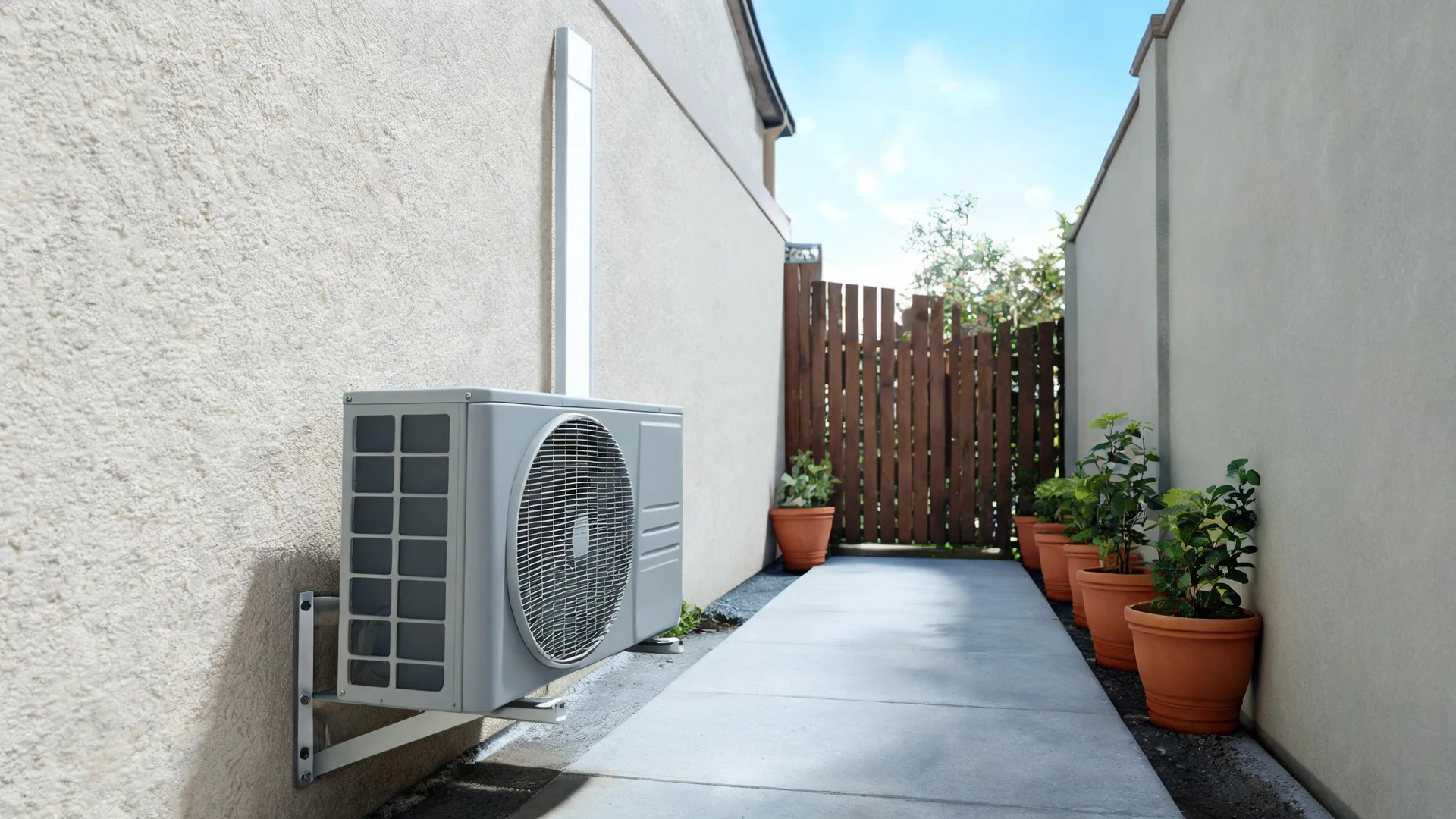
A gray heat pump outdoor unit mounted on a concrete pad next to the stone-accented exterior wall of a house.

Running through a problem doesn't fix it

A heat pump with a weak part doesn't pace itself. It runs longer to make up the difference, and that extra runtime falls on the same part that was already struggling. A failing capacitor forces the compressor to work harder every time it starts. A dirty coil makes the system run longer to move the same amount of heat. A low charge keeps it running close to constantly while still falling short of the set temperature. None of that improves with more hours on the clock. The compressor is usually what pays for it in the end, since it's the one part in the system that isn't practical to replace on its own. Caught early, most of these faults are a single repair. Left running, they tend to take the compressor down with them, and that's a different job entirely.

It won't switch modes, or won't stop

A heat pump stuck in one mode, blowing cold air when it should be heating or running nonstop without reaching the set temperature, usually points to the reversing valve. When that valve sticks, the system can't change direction, and no amount of thermostat adjusting fixes it.

Ice that doesn't melt on its own

Some frost on the outdoor unit in cold weather is normal, and the defrost cycle clears it. Ice that builds up and stays, or a coil that looks solid white, means the defrost cycle isn't kicking in, often a failed sensor or control board. Left alone, that ice blocks airflow and the system works harder to move no heat at all.

Most heat pump failures trace back to a handful of parts that wear out doing ordinary work. The contactor opens and closes every time the compressor cycles, and the contact points erode a little each time until they stop making a clean connection. Capacitors lose their charge gradually, not all at once, so the compressor or fan motor starts weaker over months before it finally fails to start at all. Sensors drift out of calibration or fail outright, telling the control board something false about temperature or defrost that leads it to make the wrong call. The outdoor coil collects dirt and debris over time, which chokes airflow and forces every other part to work past what it was built for. None of these are failures of effort. They're parts reaching the end of a normal service life.

A diagnostic visit starts outside, at the unit itself. A tech checks refrigerant pressure, looks at the contactor and capacitor, and watches how the compressor behaves when it starts. Indoors, that means pulling the cover off the air handler to check the coil, the blower, and the wiring at the control board. Error codes stored in the thermostat or control board point to what the system itself caught, like a failed sensor or a defrost cycle that didn't run when it should have. A capacitor can look fine sitting still and still test weak once it's under load, so electrical readings matter more than how a part looks. None of this is guesswork. It's a process of ruling parts in or out until the one actually causing the problem is the one left standing.