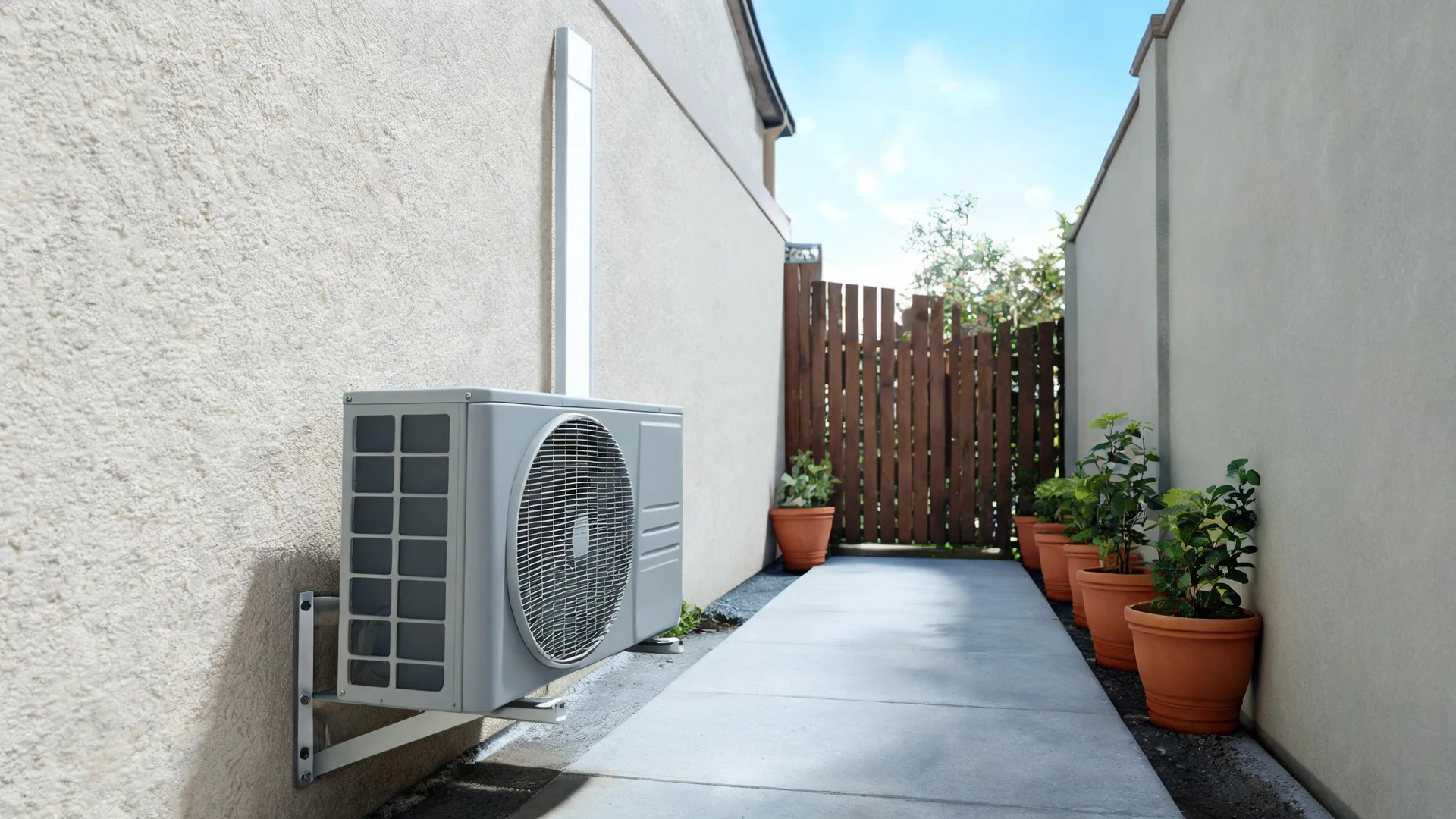
An outdoor HVAC condensing unit on a concrete pad next to a beige single-story house with a dark shingle roof.

Heat Pump Repair in Seaford, DE

Tell us about the job

Takes about a minute. No obligation.

RepairHeat PumpSussex County, DE
Step 1 of 2

What ZIP code is the job in?

The reversing valve sticks

The reversing valve switches a heat pump between heating and cooling, and it fails more often than any other part on the system. When it sticks, the unit gets stuck blowing cold air during a heat cycle or won't switch back to cooling. A stuck valve usually needs replacing, not adjusting.


The outdoor coil takes the abuse

Sitting outside year round, the outdoor coil collects dirt, grass clippings and ice. A dirty or iced-over coil can't move heat properly in either direction, so the system runs long and still misses its target temperature. Refrigerant leaks also tend to start here, at the joints and fins.

7 months
October through April, your system heats
4 months
June through September, it cools
29°F
the average winter night it heats against
85°F
the average summer afternoon it cools against
Isometric cutaway illustration of a single-story house with a dark gabled roof, showing interior rooms with ductwork leading to an indoor air handler and an outdoor condenser unit connected by lines on the ground outside.
Your system heats October through April and cools June through September.

NOAA nClimDiv, 1991–2020 normals

Zone 4A asks a heat pump to work in both directions, but Sussex County winters average 29°F overnight, not far below.

A heat pump here isn't fighting single-digit cold for months on end, so a repair is usually a better bet than a replacement.

Electricity here runs 16.57 cents a kWh, so a heat pump that's struggling shows up on the bill fast

Power costs 16.57 cents a kWh statewide
198 damaging wind events from 2015 to 2024
16 hail events from 2015 to 2024
Repairs before OctoberHeat runs October through April here, so September is the month to get a heat pump looked at.

Sussex County saw 198 damaging wind events and 17 winter storms over the past decade, along with the occasional tornado or hailstorm. None of that singles out a heat pump here. An outdoor unit is built to sit outside and take wind, rain and cold as a matter of course. What weather does do is cut power, and when a heat pump won't start after an outage, it usually just needs the breaker reset or the system restarted, not a repair. If it still won't run once power is back, that's worth a call, but check the breaker first.

A mild climate makes most heat pump repairs worth it

Winters here average 29°F overnight, not the single digit cold a heat pump has to fight in colder states. A unit that's acting up in Seaford has had an easier run than most, so a sticking reversing valve or a dirty outdoor coil is usually worth fixing rather than replacing the system.

Find a contractor
A man in a gray rolled-sleeve shirt and brown pants, seen from behind, carries a worn canvas tool bag up concrete steps toward a green front door of a shingle-clad house, with a potted shrub beside the entry.
A gray heat pump outdoor unit mounted on a concrete pad next to the stone-accented exterior wall of a house.

A newer house usually means a system worth fixing

Half the homes in Sussex County were built in 1999 or later. If that's your house, your heat pump likely isn't the original unit, but it's not running on borrowed time either. A system installed when the house was built or any time since still has years ahead of it. That makes a repair call straightforward. Fix the part that's failing, not the whole unit.

A refrigerant leak gets worse, not better

A heat pump low on refrigerant keeps running, but the compressor has to work harder to move heat with less of it. Run it that way long enough and the compressor itself can fail, turning a leak repair into a compressor replacement.

A frozen coil needs the system off, not on

Once ice builds up on the outdoor coil, running the system longer only adds more ice. The coil can't absorb or release heat through it, so the unit keeps drawing power while doing less work, and the compressor behind it is built to run with the right amount of heat moving through it, not against a block of ice.

A few things are worth checking before a call. Start with the thermostat. Make sure it's set to heat, not cool, and that the target temperature is actually above room temperature. Walk outside and look at the coil. Leaves, grass clippings or a buildup of ice against it will keep the system from moving heat properly, and clearing it away is simple. Check the air filter next. A clogged filter cuts off airflow, and a system starved for air can seem like it's not heating at all when the real problem is just dirty. If the unit won't start, check the breaker before anything else. Past that, the problem is inside the system, and that needs a trained eye.

A repair call usually comes down to one part, not the whole system. A failed reversing valve, a bad capacitor, a worn contactor, these get replaced on their own and the rest of the unit keeps running like it did before. Age matters less than people think. A heat pump that's been maintained can take a part failure in stride at almost any point in its life. What changes the math is the compressor. It sits at the center of the system, and when it fails, the repair starts costing close to what the whole unit is worth. Everything else on a heat pump is a part. The compressor is the machine.