




White colonial houses with lit windows and dark shutters line a tree-lined street at dusk, bordered by dry-stacked stone walls.

AC Repair in Wilmington, DE

Tell us about the job

Takes about a minute. No obligation.

RepairCentral ACNew Castle County, DE
Step 1 of 2

What ZIP code is the job in?

Summers in Wilmington run June through September, with afternoon highs averaging 85 degrees. That is ordinary for this area, not extreme, and your AC was built for it. When it stops cooling or starts short cycling, the cause is usually something plain. A dirty filter choking airflow. A low refrigerant charge. A failing capacitor. A condenser coil caked with debris. A contractor who checks airflow, then charge, then the electrical parts will find it. There is no reason to assume the worst before someone has actually looked.

4 months
June through September, your air conditioner is on duty
85°F
the average summer afternoon it cools against
20 hail events
in ten years, and hail bends the fins on outdoor coils
228 wind events
in ten years, and wind drives debris into outdoor units
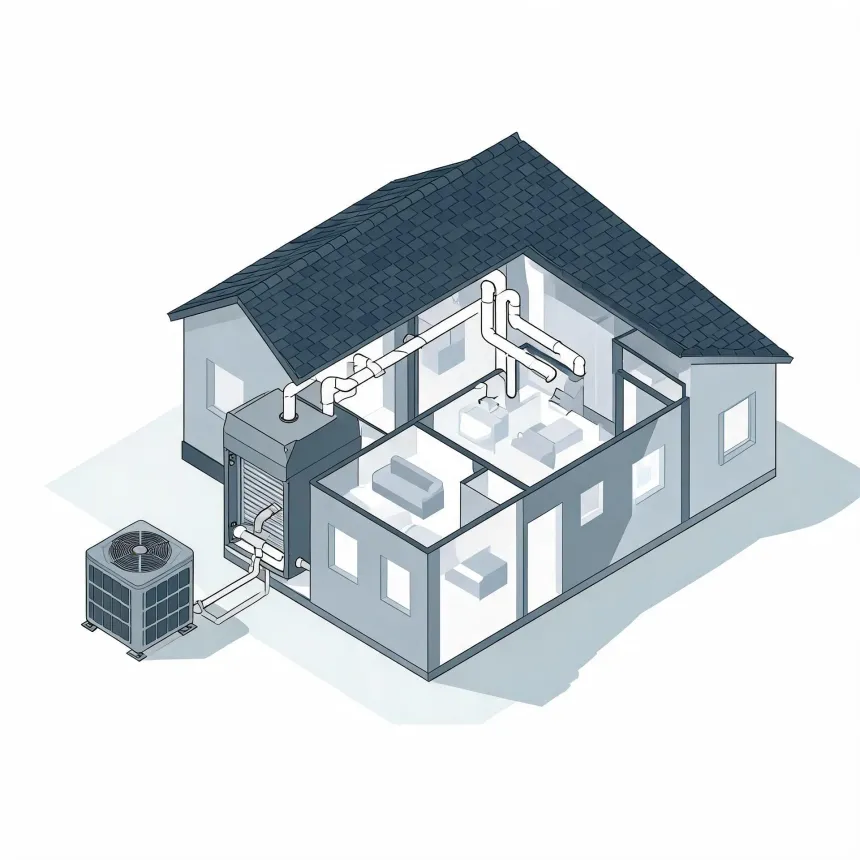
Isometric illustration of a cutaway single-story house showing interior rooms, ductwork running from an indoor air handler, and an outdoor condenser unit on a pad beside the building.
Your air conditioner works hardest from June through August.

NOAA nClimDiv, 1991–2020 normals

Cooling in Wilmington starts in June.

A capacitor or contactor that limped through last September often fails in the first hot week of June.

Most of New Castle County's severe weather is wind, and most AC failures here have nothing to do with it

274 severe weather events from 2015 to 2024
12% of homes statewide lost power a day or more in 2024
228 damaging wind events from 2015 to 2024

Electricity in Delaware runs 16.57 cents per kilowatt-hour, among the higher rates homeowners pay. An AC that's low on charge or struggling to start draws more power to do less cooling, and you pay that difference every billing cycle it runs this way. A capacitor that's failing doesn't fail all at once. It makes the compressor work harder for weeks first, and that shows up on your bill before it shows up as a breakdown. Fixing it now stops the bleeding. Waiting just means paying more for the same repair later.

Your AC isn't fighting anything unusual here, so find the actual cause

Half the homes in New Castle County were built in 1975 or earlier, half in 1975 or later. Either way, your AC wasn't singled out for anything. It's the same unit doing the same job it would anywhere else, and when it fails, it's almost always one of a few known causes. Get it looked at and fixed.

Find a contractor
A gray metal air conditioning condenser unit mounted on a concrete pad in a flat grassy field under a partly cloudy sky.

What to check before anyone comes out

Start at the thermostat. Make sure it is set to cool and the temperature you want is actually below the room temperature, since a setting bumped by accident looks exactly like a dead system. Check the breaker panel for anything tripped. Outside, look at the condenser and clear away leaves, grass clippings or anything sitting against the sides of the unit, since that coil needs open air around it to shed heat. Pull the filter and hold it up to a light. If no light comes through, that alone can choke the system enough to cause weak or no cooling. Watch the outdoor unit while it runs. If you hear a hum but the fan isn't turning, tell the contractor that directly, since it points at a specific part rather than a general problem. If you see ice on the indoor coil or the line running to it, shut the system off and let it thaw before anyone touches it, since running it iced up can damage the compressor. None of this tells you what's broken. It rules out what you can check yourself before someone has to find the rest.

A weak compressor keeps drawing on a bad start

When a capacitor is failing, the compressor doesn't start clean. It strains against that bad start every single cycle, and the motor windings take the heat from that strain. Run it another week in that state and you can turn a capacitor swap into a compressor replacement.

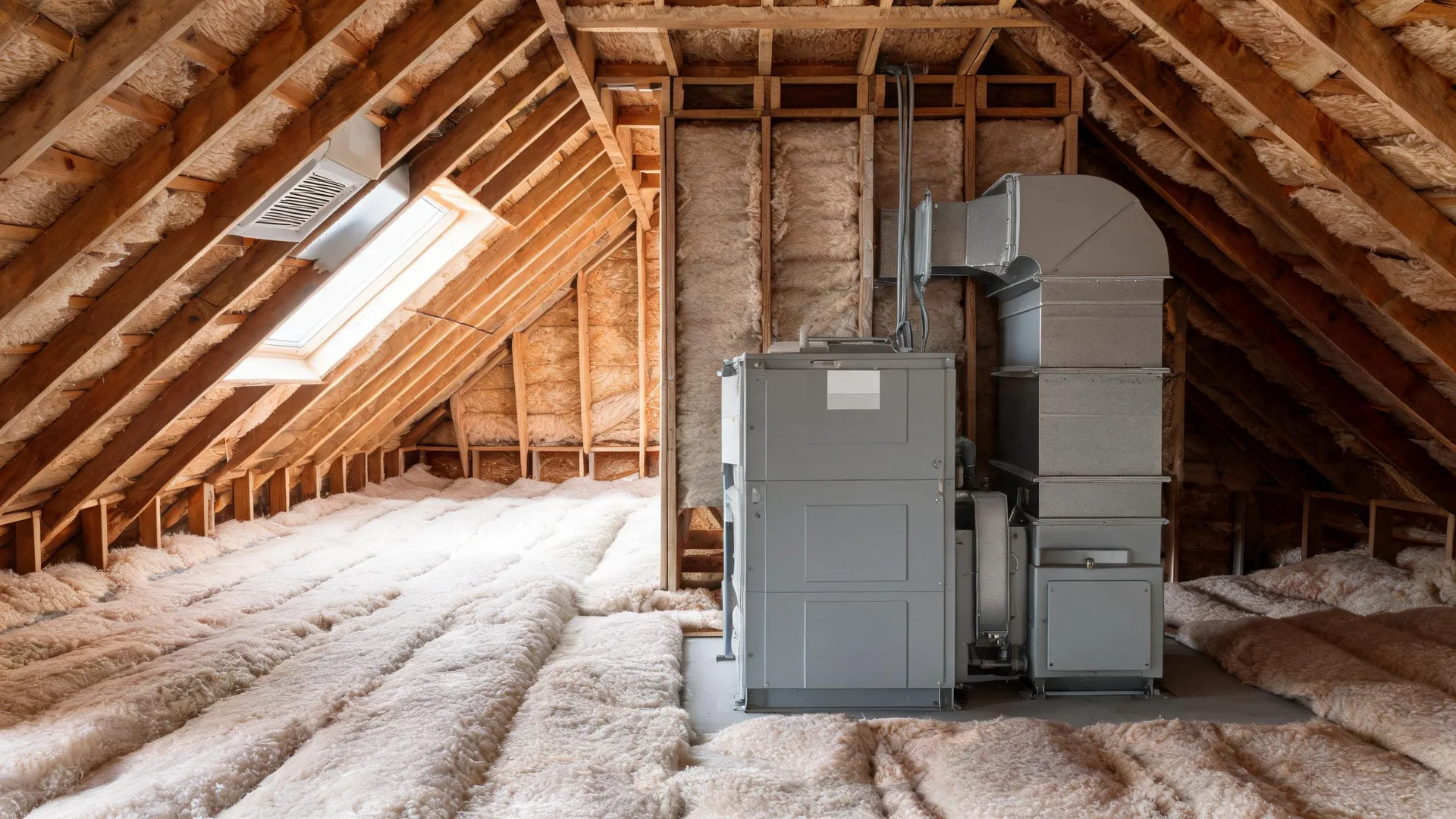
Low refrigerant lets the coil ice over

An AC low on charge still runs, just colder than it should at the evaporator coil, and ice starts forming where it shouldn't. Once ice builds up, airflow drops further and more ice forms behind it. Keep running it and the compressor can end up pulling in liquid refrigerant instead of gas, which is what actually wrecks it.

Aerial view of a residential air conditioning condenser unit mounted on a concrete pad next to a house with vinyl siding and a sliding glass door.

A new air conditioner would cut about $40 a year off cooling for a typical New Castle County home.

  • A new one at the federal minimum, 14.3 SEER2$250 a year
  • An older air conditioner$290 a year

Estimates for a typical New Castle County home, compared with an older unit built to the previous federal minimum, from EIA household energy data, Delaware fuel prices and NOAA climate normals. Your home will differ.

Repair makes sense when a part like a capacitor or contactor has failed.

Replacement makes sense when the compressor has failed or the system uses R-22 refrigerant, which is no longer made.

A repair makes sense when one part failed and the rest of the system is sound. A capacitor, a contactor, a fan motor. These wear out on their own schedule and swapping one back in brings the whole unit back to normal. Replacement starts to make sense when the compressor itself is damaged, since that part alone accounts for most of what a system costs and a contractor has to weigh that against putting in a new unit. Age matters too, not because an old unit is doomed but because parts for it get harder to find and less efficient by design standards that have since moved on. If a system has needed a few different repairs over a few different years, that pattern is worth mentioning to whoever comes out, since one more failure on top of that history changes the math. None of this is a decision to make before someone has opened the unit and looked.